


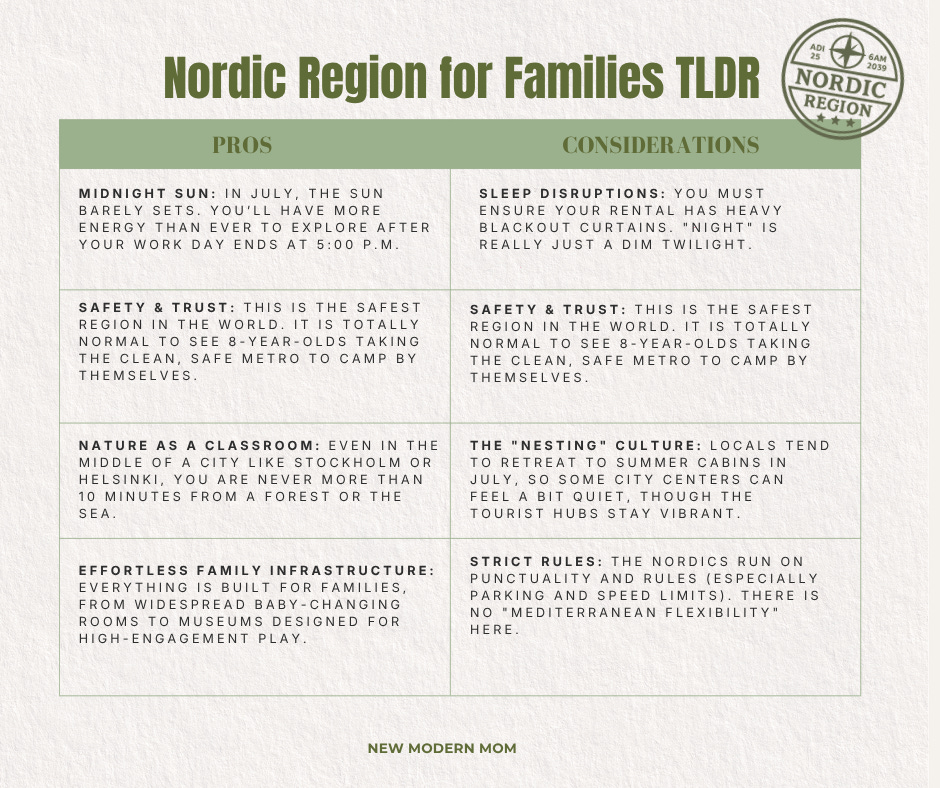
Spending the summer in the Nordic region sounds magical. While most of Europe is sweltering, the North is basking in 20 hours of daylight, cooler temps, and a culture that values hobbies and outdoor living.
A stark contrast to my very poor decision as a 21-year-old study abroad student who went to Stockholm in the middle of February. I saw the inside of bars, museums and spent an entire day in IKEA because it was truly impossible to be outside, even with my 3 jackets on. HA!!

Everyone speaks English perfectly and the “nature-first” approach to parenting is incredibly refreshing (pun intended). It’s the perfect place to base yourself if you want a productive work summer without the heat-induced brain fog of the South.
Logistics: Getting There & Staying There
Ease of Getting There:
Denmark: Fly into Copenhagen (CPH). It is one of the most efficient airports in the world, with a 15-minute train ride directly to the city center.
Norway: Land at Oslo (OSL) or Stavanger (SVG). Both are well-connected to major European hubs like London or Amsterdam.
Sweden: Stockholm Arlanda (ARN) is the main gateway. The Arlanda Express train gets you to the city in 20 minutes.
Finland: Helsinki (HEL) is a major hub for flights coming from the U.S. and Asia.
Flights: Direct flights from the East Coast (NYC, Newark) are common. From the West Coast, you’ll likely have one stop in London, Reykjavik, or Copenhagen
Getting Around: Stroller vs. Scooter Realism
The Stroller: Sidewalks are wide, elevators are everywhere, and buses/trains have dedicated stroller bays.
Kid Scooters: Mandatory. Every Nordic kid owns a scooter. The cities are incredibly flat and paved for wheels. It is the easiest way to get your kid to camp without a car.
Is a Car Necessary? No. In fact, in cities like Copenhagen and Stockholm, a car is a liability with expensive parking and limited traffic zones. The public transit and bike lanes are so elite that you can easily manage camp drop-offs without one.
Copenhagen Cargo Bikes: In Denmark, biking isn’t just a hobby, it’s a lifestyle. I highly recommend renting a cargo bike. You can throw the kids and all their camp gear in the front bucket and navigate the city like a local.
Housing for a 2-bedroom rental:
Denmark: In Østerbro or Hellerup (near the camps) ranges from$5,500–$8,500/month.
Norway: In Bekkestua (Oslo area) or Stavanger, expect to pay $3,500–$5,000/month.
Sweden: Östermalm or Södermalm in Stockholm will run $5,500–$8,500/month.
Finland: Helsinki is slightly more affordable, with nice 2-bedrooms in Töölö or Espoo ranging from $2,800–$4,200/month
The “American Reality” Check:
Air Conditioning: You will almost never find A/C in Nordic homes. The good news? You don’t need it.
Laundry: Washers are standard, but dryers are rare. However, many Nordic apartments come with access to a high-tech “drying room” (torkrum) in the basement that can dry a whole load of laundry in an hour.
Cost of Living: The Nordics are more akin to San Francisco or New York pricing. Do not come here expecting the “everything is so much cheaper” mentality you find in Southern Europe. From groceries to your morning coffee, you are paying premium prices.
The Weather: What to Expect in July
The Temperature: Mild and perfect. Expect highs between 68°F and 75°F. Occasionally it hits 80°F, but it’s rare.
The Evening Vibe: Eternal twilight. It never gets fully dark, and the air stays crisp. You will definitely need a light jacket or a sweater after 8:00 p.m.
The Nordic Food Scene & Typical Schedule
What to Eat:
Smørrebrød (Denmark): Open-faced sandwiches. Kids love the “simple” versions with egg or cucumber; parents can go wild with pickled herring and remoulade 🤪
Köttbullar (Sweden): The classic meatballs with lingonberry jam.
Fresh Berries: In July, the strawberries and cloudberries are at their peak. You’ll find stalls on every corner.
Kanelbullar: Cinnamon or cardamom buns are a daily ritual for Fika (coffee break).
Typical Eating Schedule:
Lunch: 11:30 a.m. – 12:30 p.m. They eat early here!
The “Fika”: 3:00 p.m. Coffee and a pastry. It’s a cultural requirement.
Dinner: 6:00 p.m. – 7:30 p.m. Much earlier than Southern Europe, which is great for maintaining kid routines.
Local Support
Sitly: Available in Denmark, Norway, and Finland for local sitters.
Yepstr (Sweden): A popular app in Stockholm for finding local youth to help with childcare or odd jobs.
Average Rates: Expect to pay €18–€25/hour. Childcare is more expensive here, reflecting the high local wages.

The Nordic Summer Camp List
13 unique Nordic summer camps for kids 4-17!
To access my research on European summer camps plus my thoughts on tools, systems & mindset for working moms, consider upgrading your subscription. All for just $8/month.