


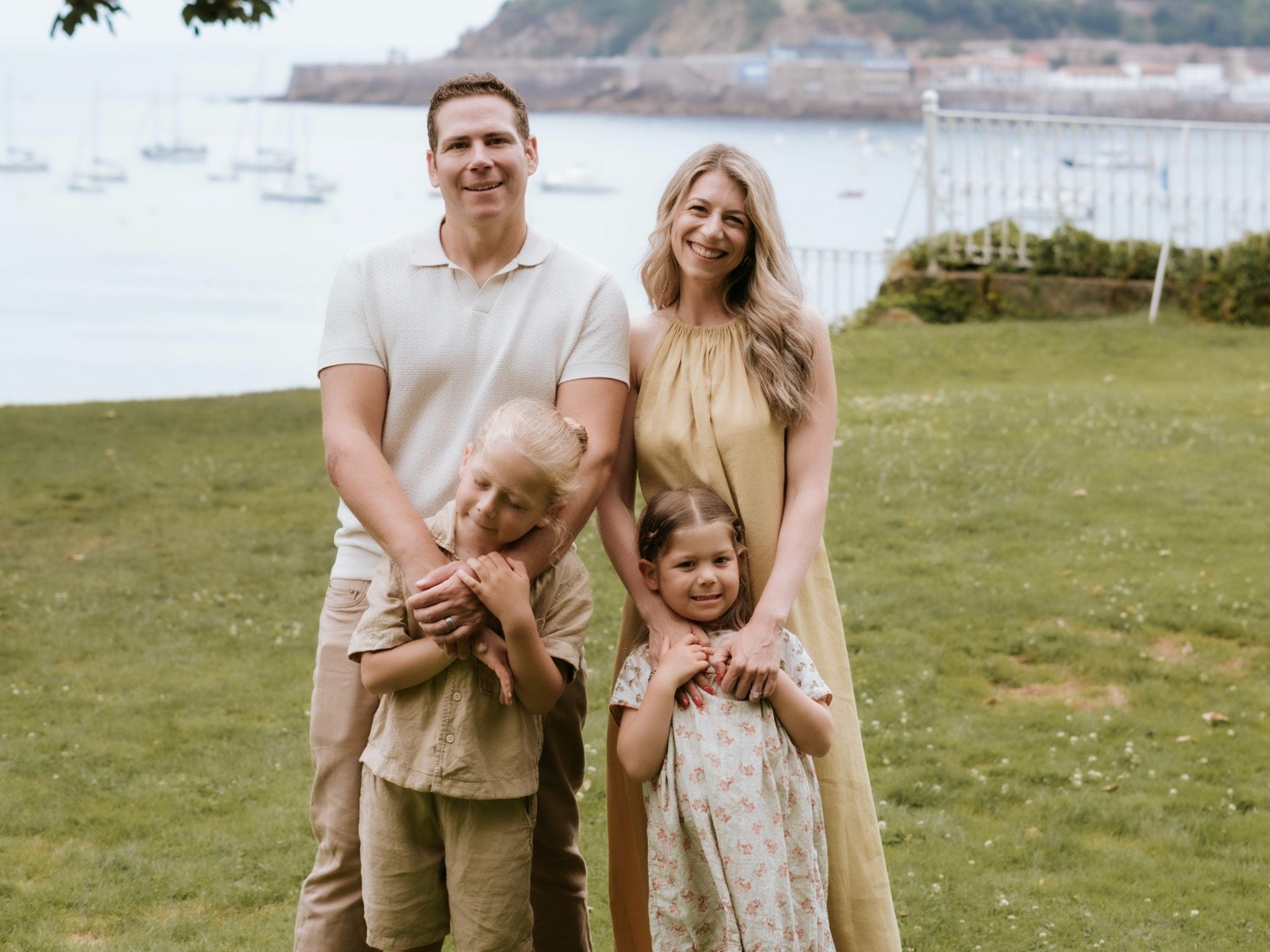
We just spent six weeks living in San Sebastián, working 2pm to 8pm (plus hopping on a bit later) while our kids were at camp until 9pm, and I kept a running log of every restaurant, workout class, rainy-day save and day trip along the way. This was our summer with Roam Collective, the program I co-founded for working parents who want to live in Europe for the summer without pausing their careers, and it was our third summer abroad as a family after Portugal and Nice.
The two questions I get asked most are how we actually work from there and where we should eat, so this guide answers both. The real work schedule, the logistics and the Basque food culture are all free below. The full list of everything we loved (and the few things I’d skip) is for paid subscribers, because it’s the exact list I’d send my closest friend before her trip.
If you already know you want to do a summer like this, Summer 2027 is sold out, and the 2028 waitlist gets first access.
What’s inside
Free: our real working day, the honest pros and cons of working on Spain time, getting there, getting around with strollers and scooters, the weather, and how the Basque eating schedule actually works
Interactive map: 150 saved places to help you navigate and plan your trip
Eat and drink: 30+ places with exactly what to order, the restaurants you need to book months ahead, and the Michelin star I’d skip
With the kids: beach mornings, rides, music, our after-camp rituals and a full rainy-day plan
Adults only: a sunset sail, the custom cocktail bar, a moms’ night out and how we found childcare
Day trips: Rioja wine country, French seaside towns, a medieval Basque village and a sheep farm
Wellness: the only barre and Pilates studios worth booking, and my exact weekly routine
Settling in: the first two days, my 3-Day Rule for jet lag, how the kids adjusted, and what I’d pack
What a real working day looked like
The most common misconception about these summers is that we’re on vacation, and we’re not. We live somewhere else and work remotely, and the whole schedule is built around US time zones.
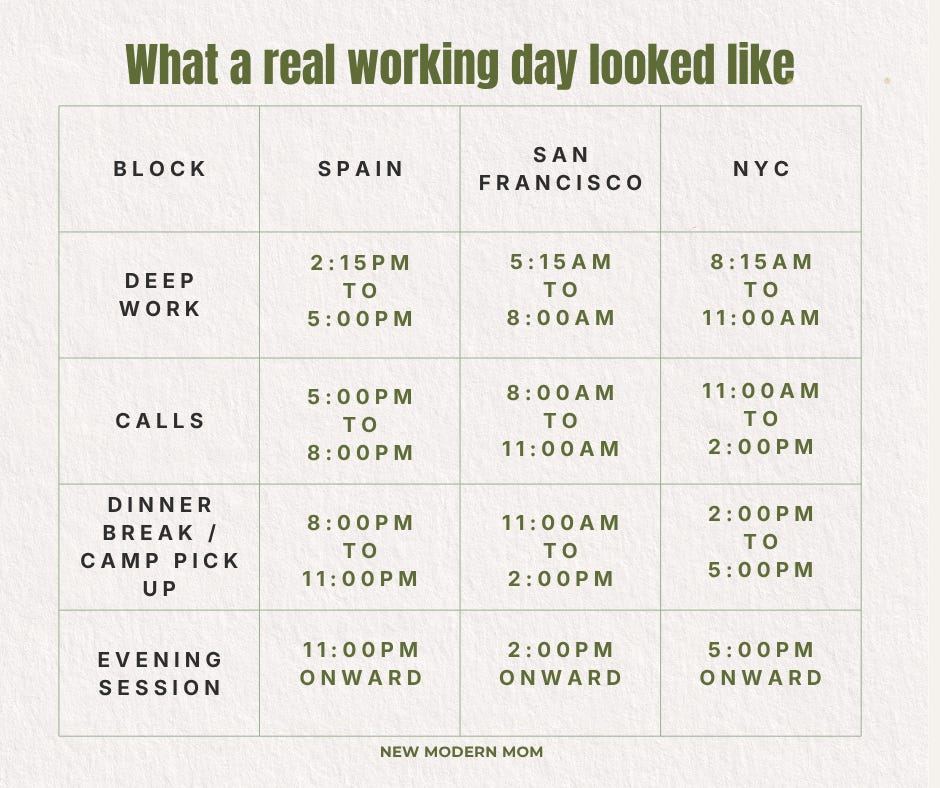
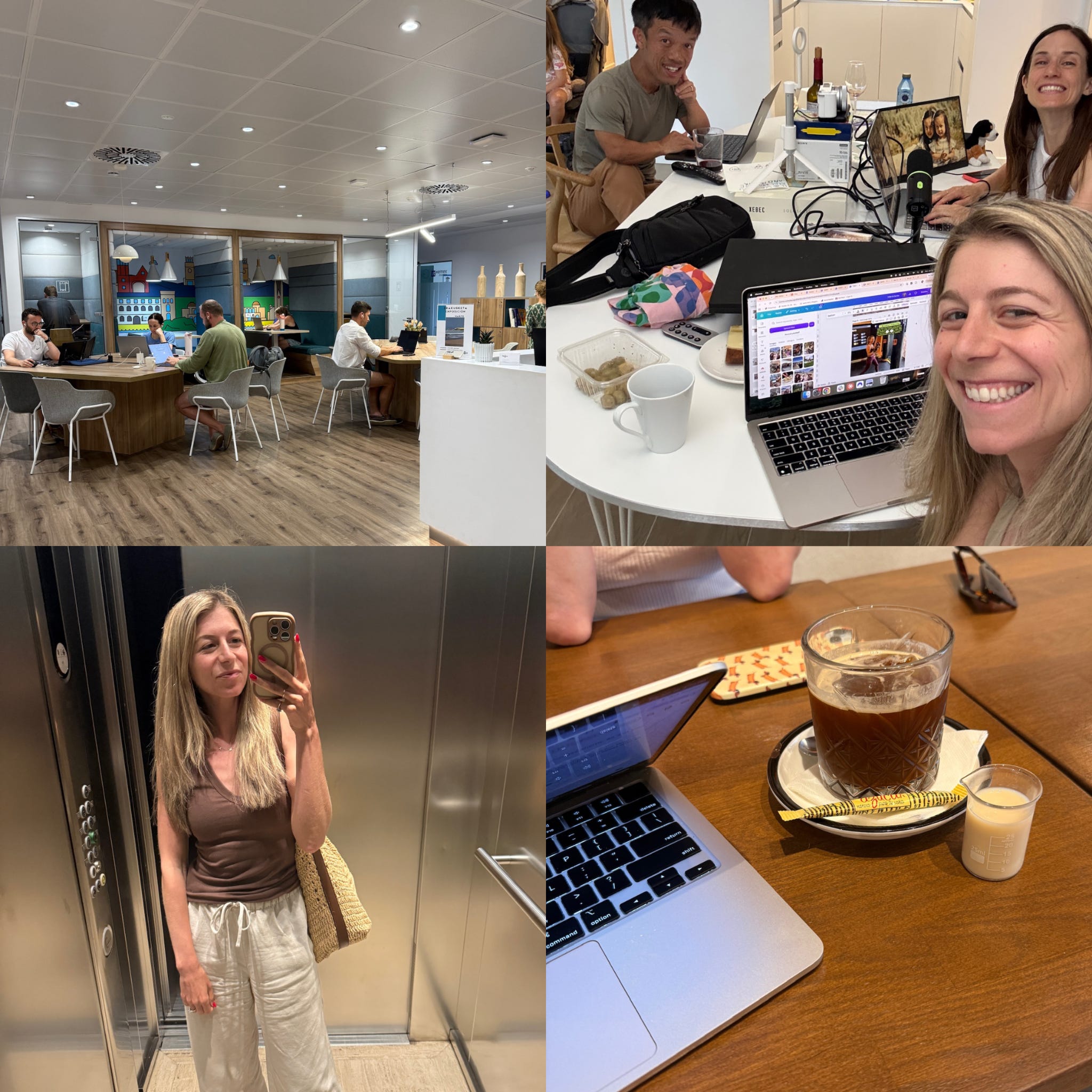
The first block is uninterrupted because the US teams aren’t online yet, and our coworking space cleared out by 6pm, which left a bunch of Roam Collective parents in the phone booths getting a ton done before camp pick-up. The evening session is for wrapping up the day, with no calls scheduled.
Honest expectations about work
The pro: our teams aren’t online for the first half of our workday, so we get a ton of deep work done, and I’m actually more efficient there than at home.
The con: there are fewer hours. I typically work 10 to 12 hours a day in San Francisco, and in San Sebastián it was more like 6 to 8.
The reality: I felt very behind in all three of my businesses after the travel days, the setup days and the shift to an afternoon-and-evening schedule. By the end of the first week I was in a much better groove, but I still felt stretched trying to be in the moment while carrying a lot at work.
What helped: swapping camp drop-offs so one of us could get an extra hour or two in, coworking alongside the Roam community, and a standing admin night on Fridays or Sundays paired with movie night for the kids.
Getting there
San Sebastián has three airports to choose from, and none of them is a big hub, so arrivals are easy but usually involve a connection.
Bilbao (BIO): the most common choice, with the widest range of European flights, and a little over an hour’s drive to San Sebastián.
Biarritz (BIQ), France: under an hour away, and a taxi runs about €80 to €120.
San Sebastián (EAS): tiny and mostly domestic, and handy if you connect through Madrid or Barcelona.
We flew in through Paris, so we landed in Bilbao, and Roam Collective organized a driver for us, which was seamless, but it was a long drive after an already long trip from San Francisco. Flying home we connected through Madrid out of San Sebastián’s own airport, and it was super easy.
Getting around
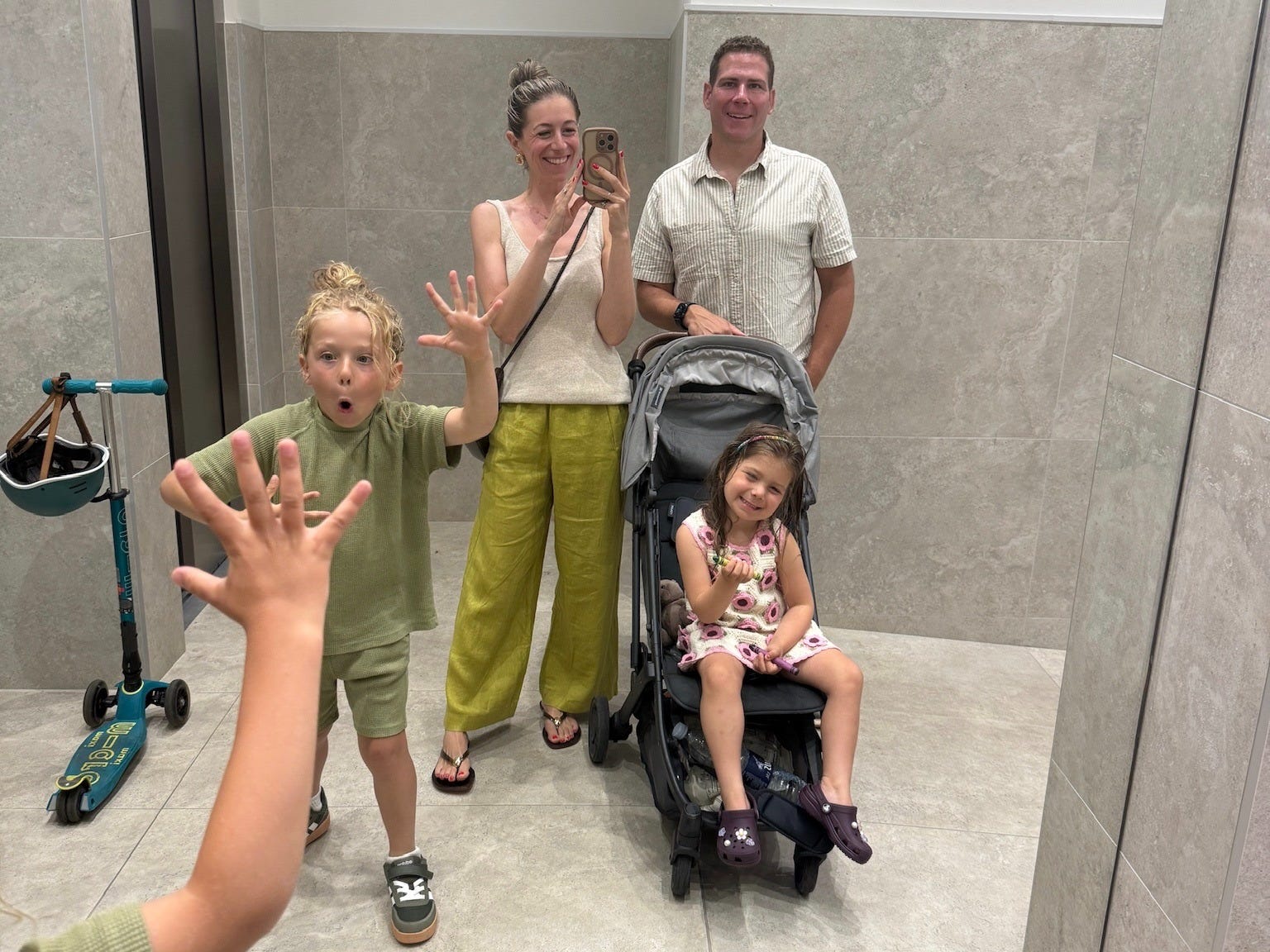
San Sebastián is a walking city, and most locals get around by foot, bike or bus. Strollers work well with the wide, low sidewalks and buses with ramps, and the kids took their scooters everywhere (we honestly couldn’t have lived without them). You don’t need a car, since city buses cover everything and take contactless cards, so skip it unless you’re planning a lot of countryside day trips, and even then just rent one for the days you need it.
The American reality check
Air conditioning: don’t assume it, because it’s not common there. We landed in the middle of a heat wave with multiple days over 95°F and no A/C, and what got us through was fans in every bedroom (one per person, even), plus 5pm beach swims. If your rental doesn’t have fans, find the closest “bazaar” on Google Maps, which is basically a tiny store that carries literally everything.
Laundry: most apartments have a washing machine, but dryers are still uncommon in Spain, so plan on a drying rack.
The weather
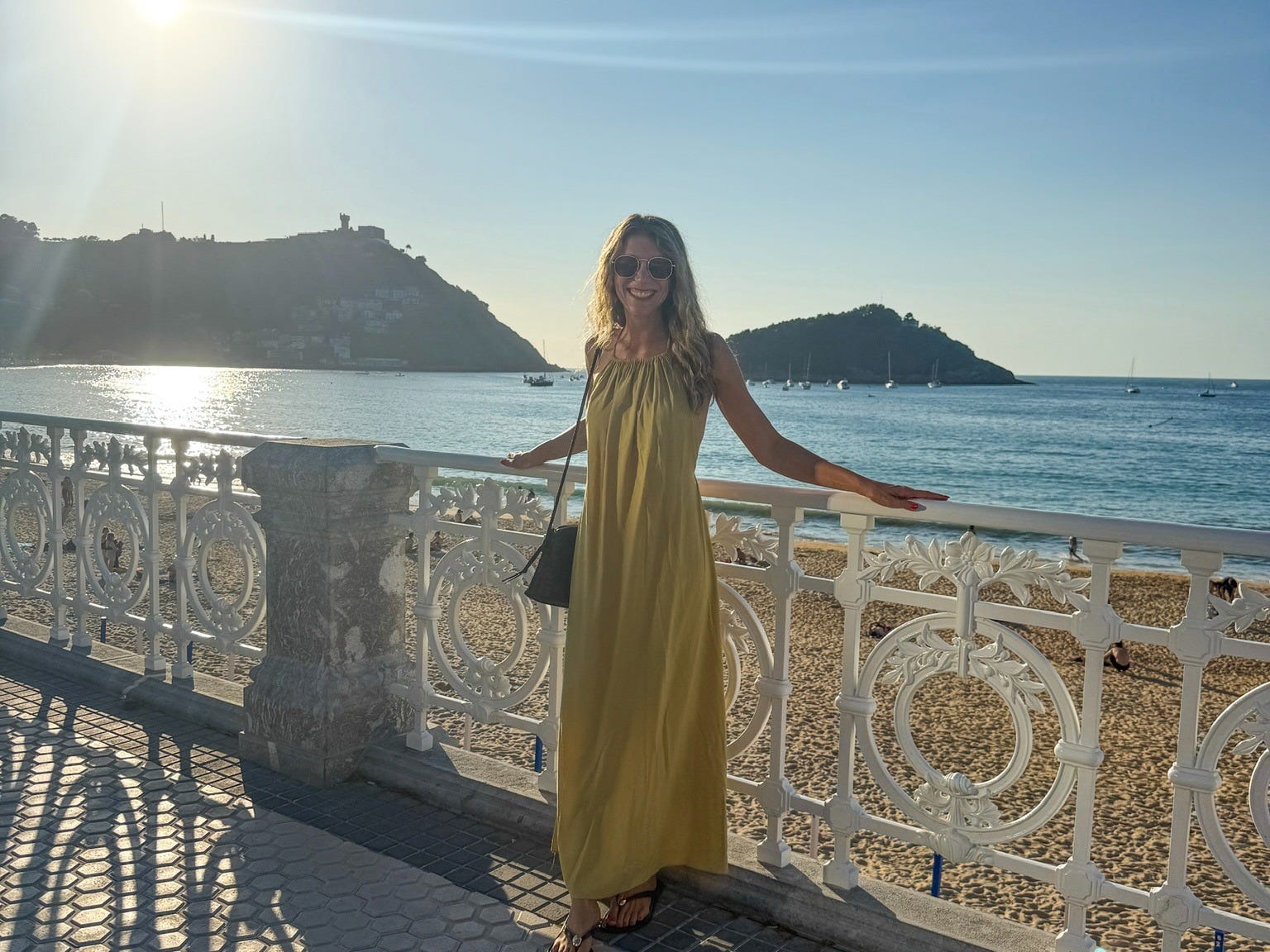
July typically runs 70°F to 82°F, but this is the Atlantic coast, so pack for a little of everything. July is the driest month with about five rainy days, and we still had one very rainy day and a whole rainy weekend, so bring a rain jacket. The water warms to around 70°F by August, which was plenty comfortable for the kids, and the sun doesn’t go down until nearly 10pm!!
The Basque food scene
San Sebastián is a food city, and the schedule is part of the experience.
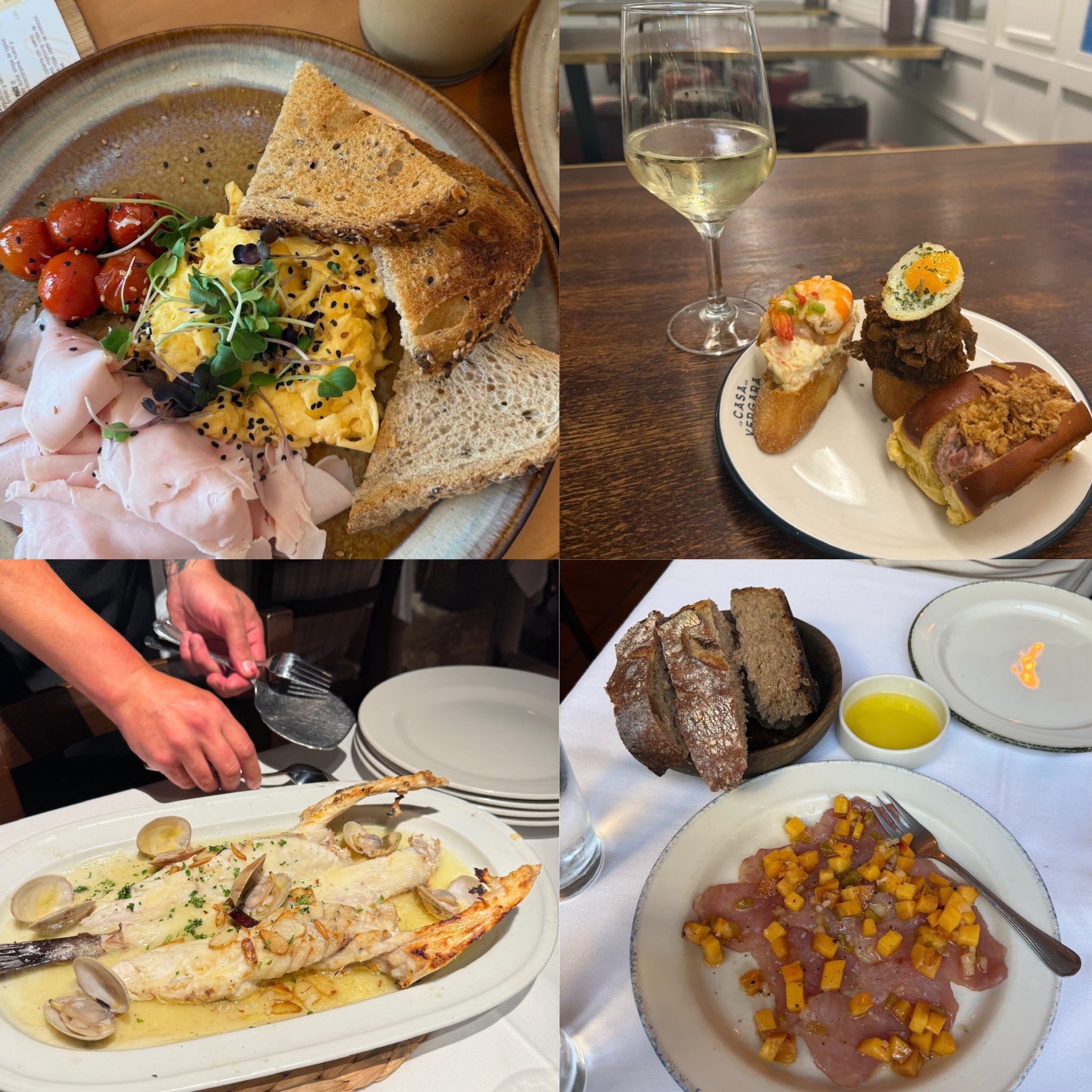
Pintxos: the Basque version of tapas, small bites on bread or on a toothpick. You move from bar to bar having one drink and one pintxo at each.
Txakoli: the local white wine. I’m not a white wine girl, and I became obsessed with how light, crisp and slightly effervescent it is, to the point that I’m still craving it every single evening.
Seafood: monkfish (if it’s on the menu, get it!!!), clams, octopus and tuna crudo were on all of our favorite tables.
Peppers and mushrooms: order the guindilla or padrón peppers every time, and say yes to anything with wild mushrooms and an egg yolk.
Steak: grilled over fire, and worth planning an entire lunch around at a traditional Basque steakhouse.
Basque cheesecake and pastries: the creamy, burnt-top cheesecake is the signature dessert, and the bakeries are dangerous.
Cider: you can order it just about everywhere, and a cider house meal is a long, multi-course tradition. Honestly, it wasn’t my favorite, because it’s more bitter than the sweet ciders in the US, but it’s fun to try.
The eating schedule
Morning: light, with coffee at the center. For us that meant a workout, then brunch, plus a €5 bottle of fresh-squeezed orange juice.
Lunch (2:00pm to 3:30pm): the main meal of the day, and restaurants often close between lunch and dinner, so plan around it.
Pintxos hour (4:00pm to 9:00pm): the pre-dinner bar-hopping window, which we often squeezed in with friends before camp pick-up.
Dinner (8:00pm to 11:00pm): later and lighter than lunch. We’d eat at 8pm, and on camp nights the kids had a “second dinner” with us after 9pm pick-up (they are served dinner during camp).

There’s one restaurant in San Sebastián you need to book minimum three months out (July had exactly one open day when Jason booked it), and one Michelin-starred meal I would never pay for again, and both are on the other side of this line.
Below is the full list for paid subscribers: 30+ places to eat and drink with exactly what to order, the dinners worth planning your week around, our favorite things to do with the kids and without them, the rainy-day plan that saved our weekend, the day trips, the only workout studios worth booking, how to find childcare, and how we settled in. Paid subscribers also get my months of research on summer camps all across Europe, plus my deeper thoughts on tools, systems and mindset for working moms.
If you’re even thinking about traveling to San Sebastián with or without kids, this is the list you want saved before you go.